This story was published in print in February 2024.
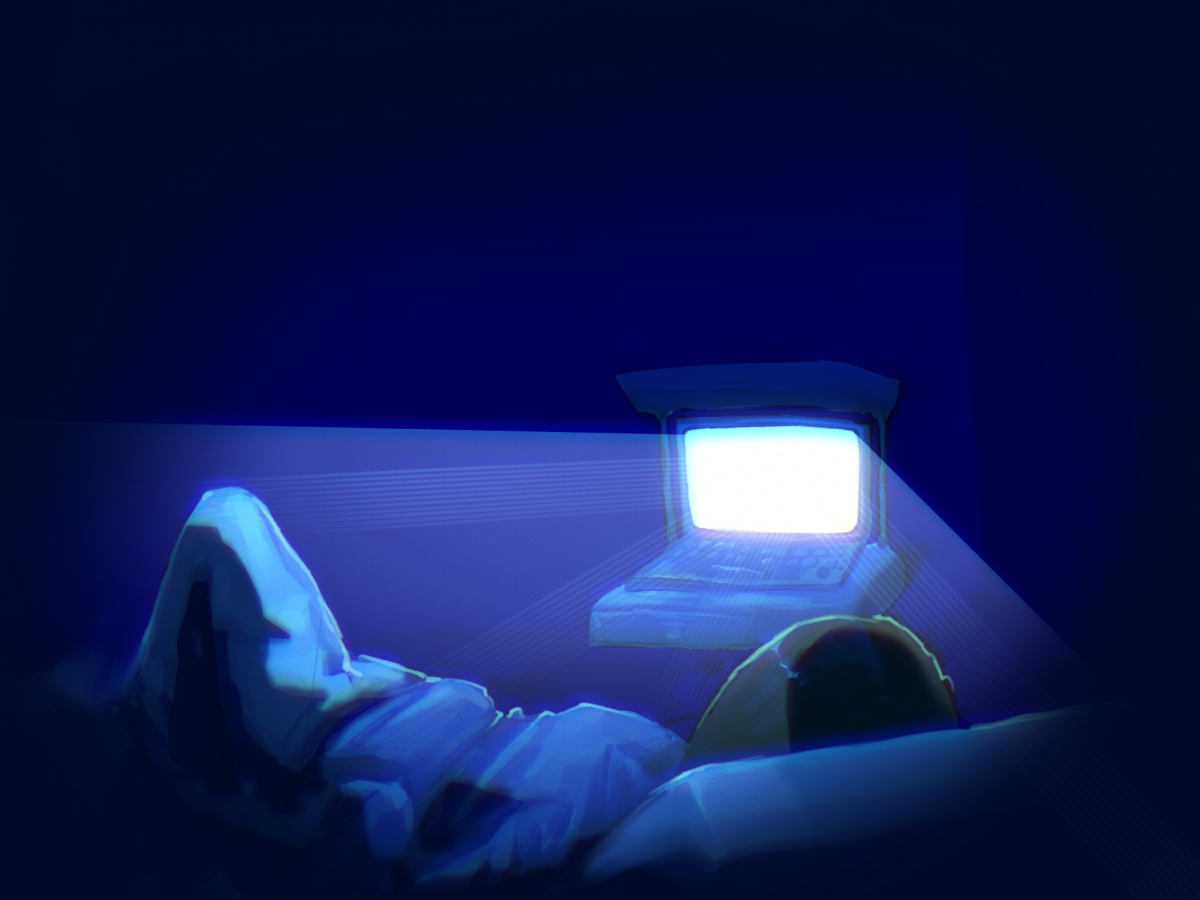
Oct. 26, 2023: I’m in an eerily dark room. I feel three green snakes slither up my body, wrap around my neck and choke me. I attempt to rip off the scaly creatures, but they tangle into my limbs and quickly move up my torso. Finally, they reach my neck, biting and latching on tight. I release a gut-wrenching scream. begging for someone to answer my pleas for help. Suddenly, the room fills with hundreds of people I don’t recognize. Everyone points and laughs at me as my cries for help go unanswered. Tears well in my eyes, turning my vision glassy. As the snakes tighten their grip, I gasp for air and release one final cry, falling to my knees.
There are three details to analyze in this dream: the desolate room, the snakes and the public humiliation. After countless hours spent scrutinizing my nightly dreams for potential meaning. I’ve learned to recognize these common motifs.
In the isolation of COVID quarantine, I began having incredibly intricate dreams, many of which I remembered vividly in the days following. Eventually, I decided to try something new and log my nightly dreams in hopes of discovering the unconscious motivations behind them.
The research behind dreams and their purpose has yielded various findings. Early leaders in psychology and psychiatry, like Carl Jung and Sigmund Freud, hypothesized that dreams respond to trends in our lives by creating symbols. Recent researchers have since offered the “self-organization theory of dreaming,” in which memories from the day are organized for storage and pass by the consciousness as they move, resulting in detailed and often random images. There’s also the “activation-synthesis hypothesis,” which argues that the firings of the brain during sleep are genuinely random, and the “threat simulation theory,” which claims that we dream of important scenarios to practice possible responses. Theories about dream symbolism still exist, but researchers now caution that symbols may mean different things to different people.
In my dream from October, I searched for specific meanings in the symbols I had identified. Being in an empty room could signify feeling alone and lacking a support system. Snakes may represent a warning sign that something destructive may soon enter my life or that an unfamiliar force within me is attempting to break free. Suffocating in my dream could symbolize suppressed emotions or indicate that I may fear relinquishing control. My screaming for help could reveal unconscious feelings of neglect or abandonment. The symbols became my own anxiety-inducing version of “threat simulation theory.”
Nov. 1, 2023: I’m running along the deserted boardwalk of Rehoboth Beach. A man with glaring red eyes is chasing me. I run into the nearest store, but he catches me and throws me over one of his shoulders. I can sense the blood dripping down my torso from his nails digging into my side. He takes me to a hole dug in the sand, the perfect size for my body. I’m shrieking, kicking and scratching, but he won’t let me go. He hurls me into the hole, and I struggle to get up as he starts covering me with sand. I’m being buried alive; sand is blinding my eyes, and my vision goes dark as I take my final gasp for air.
I spent days dissecting and analyzing each detail of this dream. Anything could be a symbol — the deserted beach, the red eyes, being chased — but after skimming hundreds of articles from various psychology sources, I still had no clear answer to the significance of my terrifying nightmares.
I began dreading the coming night’s dreams, constantly fearing that I would have a new nightmare to obsess over, new symbols to worry about. I was more anxious about my dreams than I was about my real life. I started to question if logging my dreams was helping or if it was just exacerbating my anxieties — it seemed as though the more I dwelled on my nightmares, the more frequent and vivid they became.
One night, I lay in bed gazing at the ceiling as questions flooded my mind. What was wrong with me? Why were my dreams’ messages so dark? I knew that I had done this to myself. It was as though trying to find an explanation for my own imagined scenarios led me to create problems in my real life, like overanalyzing my relationships and always preparing for the worst — anxieties and issues that I would later attempt to interpret in my dreams. My life had become a self-fulfilling prophecy.
Exercising my need for control by monitoring, logging and interpreting my dreams meant perpetuating the vicious cycle. This realization forced me to take a step back — I worked hard to stop writing down my dreams. I made an effort to quit thinking about them and stopped toying with my own emotions. It all started to slow down: the nightmares, the vivid daydreams and the constant fear. It was like I was finally free from my own mind.
We spend a third of our lives sleeping. Dreams were controlling the other two-thirds of my life, too, dragging me down until I stripped them of their power. I could finally go to sleep without being terrified. I’m not proud that it took me so long to escape the cycle I had created for myself, but by learning to let my dreams just be dreams, I could finally let go.