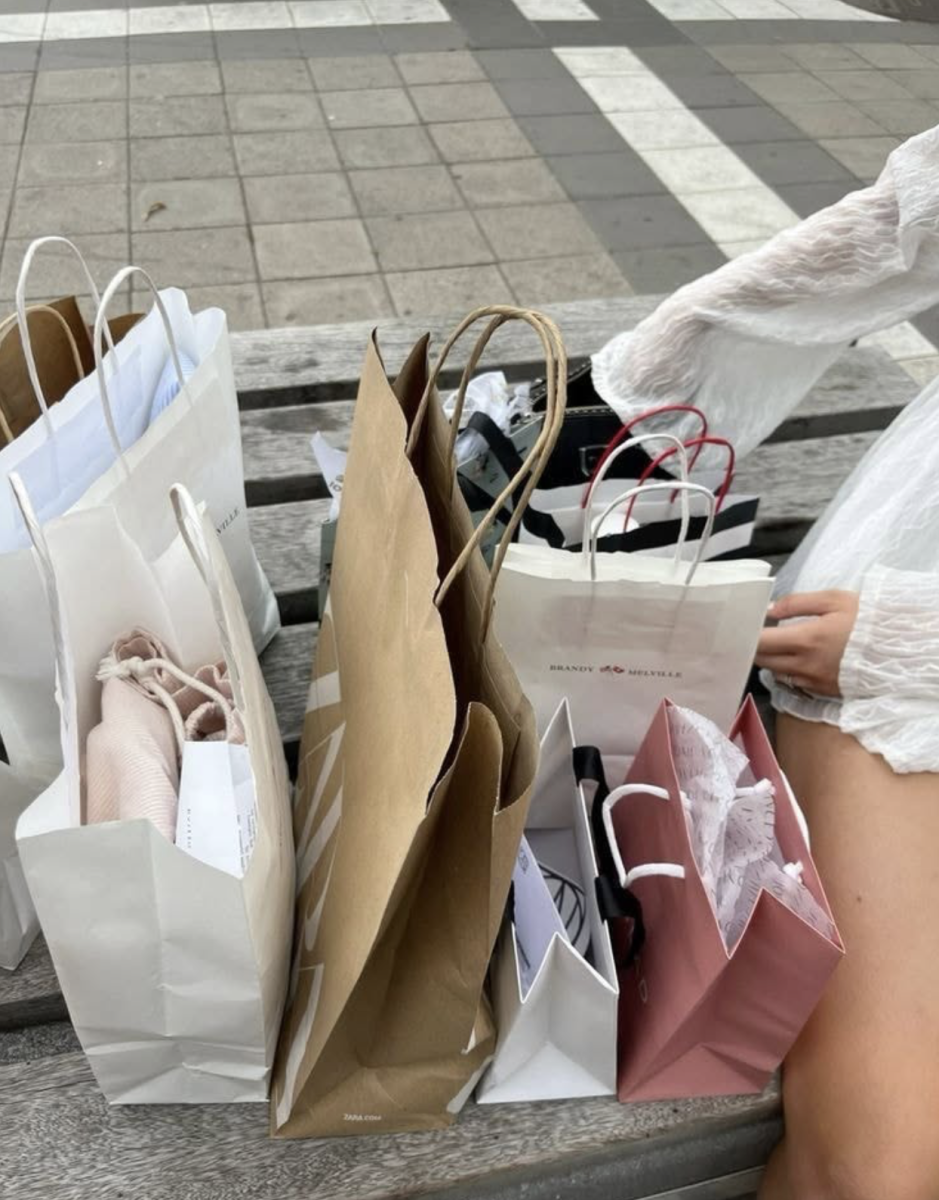
A conflicted online shopper hovers their mouse over the “buy now” button for overpriced jeans, caught between what they want and what their wallet can support. A text box on the screen catches their attention: “Split your purchase into four interest-free, bi-weekly payments.” Suddenly, the $100 price tag doesn’t seem so high.
At physical and online checkouts in stores across the world, consumers can opt to pay in portions over a set period of time instead of shouldering the entire cost at once. Over 86 million Americans, roughly 25% of the population, used these services at least once in 2024. Purchase volume through the six main providers — Klarna, Affirm, Afterpay, PayPal, Sezzle and Zip — increased from around $30 billion in 2021 to around $70 billion in 2025.
It’s a seemingly accessible option: unlike other loans, there’s no interest or minimum credit score required. The promise of convenience at no extra cost is alluring, but it ignores the hazards of overspending and late fees as consumers start stacking loans.
In 2025, the Consumer Financial Protection Bureau rescinded a 2024 law that subjected “Buy Now, Pay Later” (BNPL) lenders to the same policies as credit card providers — a backward step, especially when a growing portion of Americans is feeling financially unstable. BNPL plans have skyrocketed in popularity in recent years, but laws have struggled to keep up. Legislators should expand regulations by treating BNPL loans similarly to credit cards and prioritizing transparency.
University of St. Thomas marketing professor Seth Ketron said installment plans have existed for decades. He said they first became common during the Great Depression as “layaway” and were a staple in the late 1900s for holiday and back-to-school shopping.
“Whether it’s food, household items or buying gifts, [BNPL] is a way for people to get the things that they want or need,” Ketron said. “It exists for a reason — there’s a need in the market.”
When a large price is split into smaller segments, it appears more manageable, leading to impulse purchases as consumers seek instant gratification. Harvard Business Review found that purchase likelihood rose from 17% to 26% after adopting BNPL, and purchase size increased by an average of 10%, incentivizing retailers to offer BNPL plans to increase sales.
In particular, financially constrained participants in the study increased their spending more than higher-earning individuals. BNPL largely attracts consumers with lower incomes and higher credit card balances, as it elevates their purchasing power. However, the impulse buying associated with the plan exacerbates their economic insecurity.
A major reason for this newfound prominence is the rising cost of living in the U.S. As it becomes harder and harder to afford basic essentials, BNPL plans allow for spending without having to worry about credit history or an immediate monetary impact.
BNPL is especially prevalent for Gen Z consumers, with more than half adopting its services. Junior Anh Tran emphasized its harmful impact on teenagers and said that although she has some friends who use it, she personally does not.
“For high school students who don’t always have the money readily, it can be risky,” Tran said. “It makes you feel like you can spend money you don’t actually have and creates negative brain habits.”
While the loans themselves don’t accumulate interest, BNPL has its own set of hidden costs. For example, Zip applies a $1 to $4 transaction fee on purchases with merchants outside its partner network. However, most providers forego convenience charges; instead, they make their money through late payments.
Forty percent of users didn’t repay on time in 2025, leading to damaged credit scores and late fees as high as 25%. Moreover, the installments recur automatically, and banks impose an overdraft fee typically around $30 to $35 when an account’s funds are insufficient for a requested transaction. Some lenders even attempt to re-run failed payments multiple times, compounding the charges. In turn, reliance on BNPL increases, entrapping them in a vicious cycle that’s profitable for businesses and bankrupting for consumers.
Consumers may also obtain multiple plans at once, in a high-risk practice known as “loan stacking.” University of Virginia business professor Ray Charles Howard, who specializes in financial decision-making, explained how BNPL plans can start a spiraling habit of spending.
“If you have months across multiple products on multiple platforms with potentially multiple providers, that makes it very difficult to know exactly how much money you spend and owe,” Howard said. “Ultimately, if you can’t track your spending, it’s impossible to manage it.”
It’s time for the federal government to step in. Mandating a reasonable assessment of income and debt history ensures customers can actually repay the loan before taking it out, without completely removing BNPL’s functionality for those struggling with credit. Providers, already earning revenue from commission fees on retailers, can profit without financially devastating their millions of users.
Additionally, late fees, transaction fees and dispute rights are unclear and vary based on the company. When the tempting option to delay full payments pops up on their screen, customers don’t think to conduct extensive research on the lender. Federal agencies should cap late fees either at a small percentage or a flat rate, such as $8, and require all providers to provide an upfront disclosure of terms.
In its current state, BNPL plans remain muddled with corporate motives and are in no better standing than regular credit options. Its varying charges and promotion as the “cheaper” alternative spawns a false sense of security. In reality, it’s promoting a culture of consumerism and normalizing debt, at a time when nearly 80% of American households carry some form of debt.
As consumers demand ease combined with flexibility that cash and physical cards cannot offer, non-traditional payment methods such as BNPL are becoming increasingly common. It’s imperative to prioritize the best interests of people, not corporations; instituting consumer protection laws will keep Americans safe as they navigate a shifting economy.