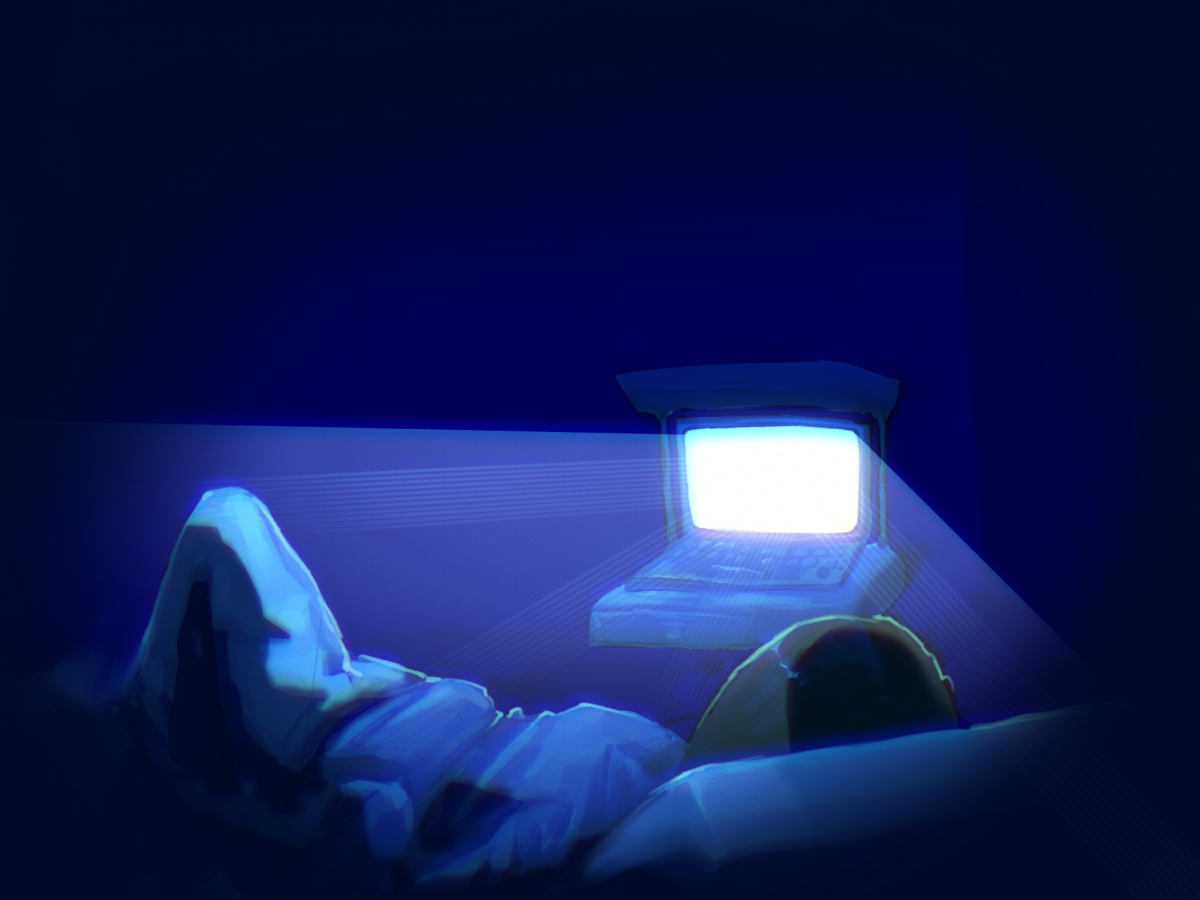
It was 2 a.m. on a school night in 2022, and at 13 years old, I should have been sleeping. A very important pre-algebra test awaited me in the morning, but I couldn’t fall asleep. I sat in the darkness, my puffy eyes staring at the ceiling fan, my face lit by the stark white glow of my distant phone screen.
I didn’t know it yet, but an anxiety disorder diagnosis would later explain my pre-teen feelings of confusion, isolation and insomnia. My brain was stirring late at night, desperately searching for a distraction from the inexplicable nerves I could not fend off. Naturally, I turned to the popular video-sharing platform YouTube.
At that moment, the YouTube algorithm surprised me with a recommendation for a video meant to elicit an autonomous sensory meridian response (ASMR) — a reaction that begins in the scalp and moves down the body. The large, white font of the title read, “ASMR: Repeating Positive Affirmations Until You Fall Asleep.” The interest piqued, but the cringe radar in my judgy middle school brain was loud. I’d never clicked on an ASMR video before, and my only frame of reference was classmates making fun of mukbangs or the cuppy, clicky sounds that grossed everyone out. My narrow perception of ASMR reduced the whole genre to incessant tapping and uncomfortable whispering, neither of which was particularly appealing to my prepubescent self.
Even though I was alone in the privacy of my bedroom, I still felt ashamed of clicking on that video. To many, ASMR is weird and uncomfortable. The first time I experienced tingles was honestly alarming. I compared it to goosebumps, except there was no physical indication of the sensation.
As I slowly let go of my bias and determination to poke fun at something unfamiliar, I realized that I was actually enjoying it. I could properly wind down and process my thoughts and difficult feelings of the day that had passed, all while a stranger recited inspirational quotes against the greenscreen backdrop of a candlelit spa. The whispering reminded me of hushed conversations with a friend in the back of the classroom during a boring lesson. The tapping was rhythmic and satisfying, and the noise of my brain had finally dulled.
The next thing I knew was the light of daybreak filtering through the shutters. As I awoke to the warmth of the sun on my face, I found my laptop perched precariously on my lap. There was still an unfamiliar figure on my screen, experimenting with various triggers. I slammed my laptop shut and ran to the bathroom to get ready for school. Flushed with awkwardness, I stared at myself in the mirror while brushing my teeth and eventually came to terms with the damning realization: that was the best sleep I’d had in a while.
From that point forward, I continued to watch similar videos, even exploring ones too mortifying to share with peers. I watched hair salon roleplays and soft-spoken “Get Ready With Me” videos — a genre that would have had me recoiling with second-hand embarrassment mere weeks ago. Consuming this content made me a more open-minded and relaxed person.
Science backs up ASMR’s effectiveness as well. A NIH study found that ASMR brings about a better mood, reduces stress, combats insomnia and even improves cognitive abilities like memory in some cases. Since its discovery, the creation and consumption of online ASMR content has skyrocketed, with over 500,000 channels and over 2.5 million videos on YouTube. It goes to show that I’m a representation of a community that has found strength, connection and peace in a seemingly frivolous hobby.
Mental health can be hard to keep up with at a school like Whitman, where over-competitiveness and burnout are never an excuse to take a break. I’ve had days where there was time for nothing but homework and practice, and I once again pushed my already wavering commitment to well-being onto the back burner. While psychologists and psychiatrists are still studying the causes and mechanisms of ASMR, researchers using MRI scans have found that ASMR increases alpha wave activity in the brain, which they associate with meditative states and relaxation.
ASMR isn’t a substitute for professional help, but I have found that keeping it in the mindfulness toolbox is quick, beneficial and convenient. For anyone looking to expand their wellness horizons by trying something a little more exciting — and maybe stranger — than meditation, ASMR is knocking on your door: in a calming manner, of course.