This story was published in print in February 2024.
Bethesda residents might not think to describe Maryland as “rural” but in reality, the state government recognizes 18 of Maryland’s 24 counties as “rural,” including Allegany, Frederick and Carroll counties. The Maryland state government classifies counties and other jurisdictions as “rural” based on proximity to agricultural activity. However, according to the Rural Maryland Council, the state may also designate counties as “rural” based on their lack of access to essential services like healthcare.
The state government has acknowledged inadequate healthcare services in rural areas in commissioned studies and the development of dedicated state agencies. In 2016, former Maryland Governor Larry Hogan signed legislation to form a Rural Healthcare Delivery Workgroup to research the roots of rural communities’ measurably higher health risks and mortality rates and develop solutions to minimize urban-rural healthcare disparities.
The team found that the hazardous quality of existing transportation systems, inefficient travel routes and a shortage of healthcare providers in rural areas were major contributors to the inaccessibility of healthcare. According to Pew Research, rural Americans must travel an average of 10.5 miles to the nearest hospital, compared to 4.4 miles for those in urban areas. Rural infrastructure, including undeveloped roads, can also pose a heightened risk and impact community members’ ability to reach medical care. Four percent of the U.S. rural hospitals closed between 2013 and 2020, and currently, 631 rural hospitals — more than 29% of all rural hospitals nationwide — are either at immediate or high risk of closure.
Compared to urban healthcare facilities, rural hospitals disproportionately serve older Americans with Medicare and Medicaid and profit less from private insurance than urban facilities do. According to a survey by the Transamerica Center for Health, 19% of rural residents have no health insurance, a rate greater than the 10% of urban residents without health insurance.
Director of the Maryland State Office of Rural Health, Sara Sietz, works to promote state and national rural healthcare access policies and support efforts to expand rural healthcare services.
“Maryland’s rural areas tend to be home to our state’s older, lower-income, lower-educated populations,” Sietz said. “There tends to be less access to primary and specialty which results in the need for additional resources just to meet primary care needs, care, like transportation and potentially time off work, leading to the poorer health outcomes we see.”
Despite their limited access to health care, rural communities tend to require more medical attention and care than urban and suburban communities. According to the CDC, rural residents report less leisure-time physical activity on average than their urban counterparts. NIH newsletter News in Health published data in 2022 showing how rural residents are also more prone to chronic health diseases and often have more limited access to healthy foods and activities, which can lead to conditions like obesity and high blood pressure, researchers said.
According to the University of Iowa Injury Prevention Research Center, the U.S. rural demographic also faces a higher risk of physical injury than urban or suburban residents. In rural communities across the country, agriculture is one of the largest and most important industries. In Maryland, over two million acres of farmland are actively producing various crops and raising livestock. Farming is essential to the Maryland economy and food supply, as well as the livelihoods of the rural residents who rely on agricultural production to support their families. Often, farming requires the operation of heavy machinery and dangerous equipment as well as taxing work during harsh weather conditions; the National Institute for Occupational Safety and Health ranks agriculture among the most hazardous industries in the U.S.
Sophomore Anna Petrides works at the Springfield Farms vendor at Bethesda Central Farmers Market. When Petrides’ boss, the manager of the farm, recently dealt with health issues, the lack of healthcare facilities near their house made it challenging for her to run her business and sell products at the farmer’s market, her main source of income, Petrides said.
“There are so many accidents that can happen in farming because it’s such physical work,” Petrides said. “When they do get into accidents, it’s going to cost them more than the average person because whatever time they’re not able to work physically, they’re losing money.”
Science teacher Sherri Gingrich lives in Damascus, a region near both suburban centers and agricultural land. Gingrich and her neighbors have felt the effects of rural healthcare inefficiencies, she said. Gingrich acknowledges how lucky she is to live in a rural area that’s closer to urban opportunities, but finding reliable healthcare in her immediate community remains a struggle.
“It’s harder to find good healthcare in the rural areas because healthcare professionals are going to go to the bigger and more expensive areas,” Gingrich said. “I’m not saying we don’t have good doctors, but the best ones are usually booked up and harder to get to and find.”
Gingrich sees healthcare prices as an additional roadblock to rural healthcare access. Some rural residents have jobs that provide health insurance or can negotiate health-care discounts for their employees, but many don’t have that option and struggle to pay for medical care out of pocket or afford the high prices of private healthcare.
Gingrich described the experience of a worker from the Montgomery County Agricultural Center Inc., which provides employees with a healthcare plan that places an added financial burden on employees. When the worker was diagnosed with kidney stones, they had to cash in their entire retirement fund to pay their medical bills, with the understanding that they would go further into debt if more complications arose.
Jonathan Dayton, Executive Director of the Maryland Rural Health Association, has observed the inadequacy of healthcare in rural Maryland and sees the potential implications that will occur if this problem continues to be overlooked, he said.
“Healthcare in rural communities, especially in Maryland, looks much different than urban counterparts,” Dayton said. “The more that the importance of having a primary care physician is under-discussed, it continues to lead to health issues for patients as they age, and ultimately, this becomes a generational issue for many families.”
In June of 2023, the Women’s Health Center of Maryland opened in Cumberland, Maryland. The facility opened in response to the recent Dobbs v. Jackson Women’s Health Organization Supreme Court decision on abortion rights, which ultimately caused the shutdown of the Women’s Health Center’s location in West Virginia. The Cumberland Center’s founding staff saw the region quickly becoming an abortion care desert after the Dobbs decision; in fact, seven of the 13 U.S. states imposing abortion bans are among the top 10 states with the highest rural population.
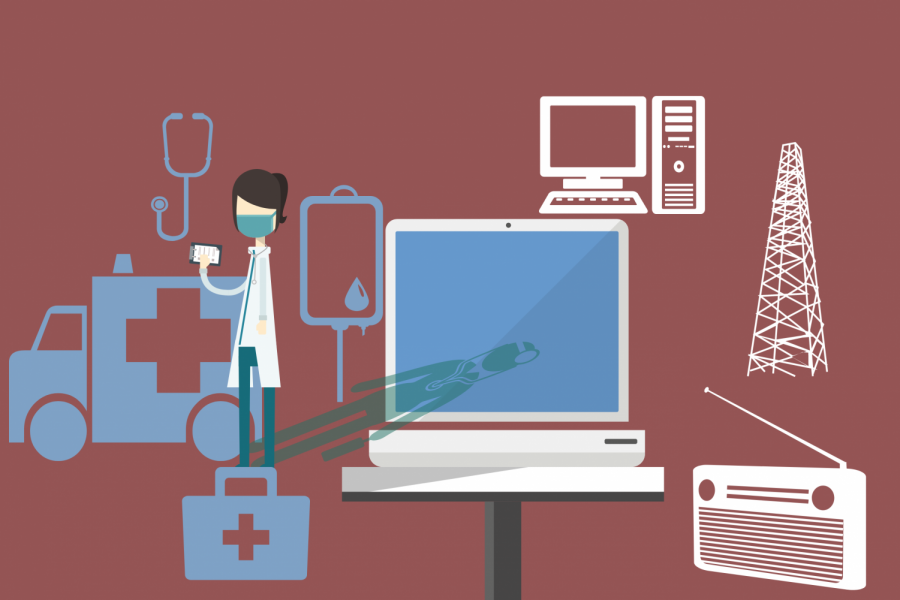
Given the state of today’s technology-focused and largely urban society, the lives of individuals in rural communities typically don’t get as much social recognition. Rural health advocates are aiming to bridge the gap between rural populations and medical resources by expanding telemedicine, the use of telecommunication technologies to allow patients to connect with healthcare specialists through an online platform. Supporters of virtual health-care programs say telemedicine encourages people to seek care and follow-up consultations that they might otherwise neglect due to the inaccessibility of in-person appointments.
Despite improvements in telemedicine technology and efforts by the Women’s Health Center and the Maryland State government to bridge the healthcare gap, Petrides sees these commonly overlooked rural issues as an overall reflection of society’s apathy towards rural communities, she said.
“Most people are concerned with big cities and technology. Most people go to the grocery store but don’t really think about where the food they buy comes from,” Petrides said. “Rural populations have a significant role in our society, and their problems matter.”