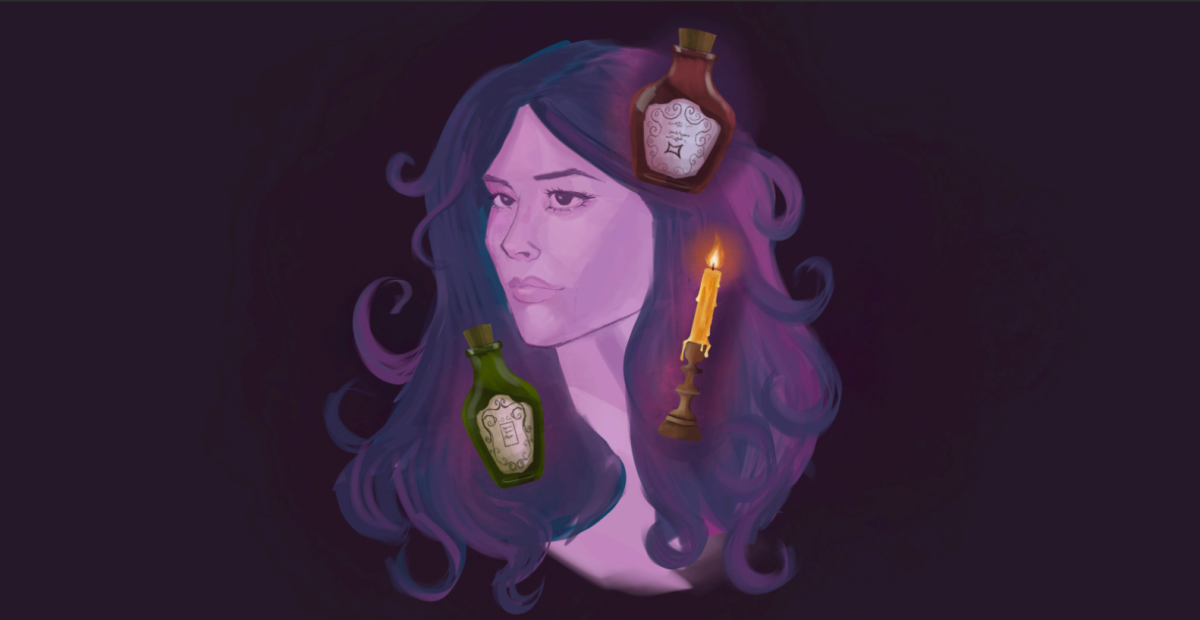
Whether it’s the green-skinned Wicked Witch of the West from “The Wizard of Oz,” the determined young students in Harry Potter or a 16-year-old with magical powers in “Sabrina the Teenage Witch,” society shapes witches into a variety of different genres. Throughout the history of film and television, Hollywood has often portrayed witches as exclusively female and evil, as villains or supernatural outsiders. However, these fictional representations don’t always accurately reflect the reality of modern witchcraft. In truth, many practitioners of witchcraft are everyday people with diverse beliefs, backgrounds and motivations, some of whom have even turned their practices into successful businesses.
The earliest records of witchcraft date back thousands of years, starting as early as 721 B.C. Ancient Egyptians, Greeks and Romans believed in individuals who used rituals to communicate with spirits or influence the outcome of events. Stories about these mystical figures often appeared in early mythologies and law codes. In English, the term “witchcraft” stems from the Old English word “wicce,” which referred to a person who practiced magic.
During the late Middle Ages, roughly around the 1400s to 1500s, witchcraft became widely feared and discriminated against. With Europe being predominantly Christian at the time, witches were often associated with Satan, and many claimed they were representations of the devil. Religious authorities and government officials declared that any magical practice was a threat to social order. This led to widespread hunts and trials, and in many places, those accused were violently punished or killed. These persecutions and accusations were not limited to Europe — evidence of witch hunting can be traced all over the world, such as India, New Guinea and sub-Saharan Africa.
Stacey Demarco, founder of The Modern Witch and author of over 20 witchcraft-related books, has practiced paganism for over 10 years. She offers her practice through her website and helps people understand witchcraft. She emphasizes that witches aren’t evil; instead, they’re healers and honorers of nature.
“It’s quite funny because people assume all witches are scary or evil, or maybe that they wear all black and ride a broom,” Demarco said. “But in fact, it’s the opposite — witches are everyday people. I worked in a corporate job before I did this full-time, and many others do the same.”
One of the most well-known examples of witch-hunting in America occurred in Salem, Mass, in 1692, when a wave of fear and suspicion led to more than 200 women being accused of practicing witchcraft, with 19 being executed. Neighbors, families and communities turned against one another, often attributing mental illness or unfamiliar behavior to witchcraft.
These trials had a lasting impact, associating witchcraft directly with ill intentions and danger. When unexplained events occur, such as items going missing or a person suddenly falling ill, many people blame witchcraft, often without any real evidence. Although about 40% of the global population believes in witchcraft, many widely followed religions incorporate beliefs about spells, curses or supernatural influence.
Today, individuals who identify as witches come from diverse backgrounds and follow various paths, with definitions varying from person to person. Wiccan witches, the most common type of witch, belong to a branch of modern Paganism. Paganism views the divine as being inherent in nature and follows a polytheistic belief system. They perform rituals, celebrate eight festivals known as Sabbats and practice spell-work for personal growth and meditation.
The eight holidays of Paganism are often called the “Wheel of the Year,” with the dates all relative to the seasons changing. Some of the dates of celebration include the winter solstice, spring equinox, summer solstice, fall equinox and Halloween. These days used to represent the different stages of harvesting, but in more recent times the holidays represent different things. Demarco said the festivals range from celebrating new beginnings and honoring ancestors, to nature and manifesting abundance.
David Dashifen Kees, Alexis Clark and Logan Albright are all members of the Firefly House, a pagan organization in Washington, D.C. This community provides a space for followers of paganism to connect and celebrate many of the holidays together.
“The Firefly House has been a great way to meet people and practice together,” Kees said. “We often create personal rituals for the holidays and it can be really fun practicing them with the group.”
In paganism, no singular book sets all the rules, and there is no singular god that everyone must obey, Demarco siad. It’s a polytheistic religion that celebrates many gods and goddesses.
“Because there is no bible for Paganism, individuals create a Book of Shadows, which is a written record of all the different spells you have learned over time from elder witches,” Demarco said. “However, spells can be very personal to the witch, and everyone works with different gods or goddesses in their practice. Paganism is just truly connecting with nature and the universe and using that energy to manifest different things.”
Many witches follow the Wiccan Rede, a set of ethical guidelines. “And it harms none, do what ye will” — understood today as “if it doesn’t harm anyone, go ahead and do what you want” — serves as a moral guideline, encouraging practitioners to consider the consequences of their actions to avoid unnecessary harm. Demarco said witches use several natural elements or seasons, such as the wind, moon, and tide, to perform their rituals.
“When we actually perform a spell, it’s mainly manipulating energy, sitting with it, and putting it through your body to manifest it into the universe,” Demarco said. “I personally have never hexed someone [casting a spell to harm a person] because all that negative energy has to go through me first, and why would I put myself through that? That energy has to go through me for multiple days, and that is something I wouldn’t put myself through; however, some witches choose to do it for a certain price.”
Other types of witches include the eclectic witch, who blends their beliefs from multiple traditions to create their own personal path, the green witch who works closely with herbs and plants for healing practices, the crystal witch, who uses crystals and stones for energy work, and the traditional witch, who practices historic or regional magic techniques.
In recent years, another modern twist on witchcraft has emerged online — Etsy witches. This term refers to people who offer witchcraft-related services and products — such as tarot readings, personalized spells or healing crystals — on marketplaces like Etsy, such as tarot readings, personalized spells or healing crystals. These sellers became viral on “WitchTok” after influencer Jaz Smith posted about the witch she hired to ensure she had good weather on her wedding day — and she did. Often priced between $10 and $20, these spells offer a wide variety of services such as wealth, love, protection and cleansing — even personal spells can be requested to create rituals for a specific goal. Etsy recently banned the sale of these services on its website, causing many of these witches to create new websites and communities.
Demarco said that there is a huge misunderstanding about what it means to be a witch, and she often finds people comparing it to other religions. She said that Paganism is different because it isn’t evangelical, meaning followers don’t encourage other people to join the practice.
“When I tell people I am a witch, they often respond by saying ‘Oh, are you going to curse me?’ or ‘Are you some type of satanist?’” Deamrco said. “It’s quite funny because we’re the opposite. But I definitely wish there wasn’t such a negative connotation with witchcraft, because it can be very empowering.”