One thousand electrodes, transmitted by a device the size of a quarter, are enough for college student Noland Arbaugh to play digital chess again after a lake accident left him paralyzed from the shoulders down. Without straining a muscle, he can manipulate the pieces by just thinking about his next move.
Arbaugh had been paralyzed for seven years before he heard of Neuralink, Elon Musk’s brain chip company focused on restoring autonomy to patients with neurotrauma. With the help of his friend Greg Bain, who told him about the company in 2022, Arbaugh applied to become the first patient in Neuralink’s Precise Robotically Implanted Brain-Computer Interface (PRIME) trial. He didn’t expect the company to consider him, but a day later, the Barrow Neurological Institute, one of Neuralink’s trial sites, contacted him. After months of interviews and evaluations, he underwent surgery and received Neuralink’s N1 Link successfully in 2024.
Since its first operation on Arbaugh, Neuralink has performed on 20 patients and expanded its trial sites internationally to the U.K. and Canada. Although the company is not the first or only one exploring brain-computer interface (BCI) technology, its scale of impact on paralysis treatment and the accompanying headline-grabbing controversies have placed Neuralink in the neuroscience spotlight, eliciting both admiration and skepticism.
Electrical brain stimulation dates back centuries. In Ancient Egypt and Rome, physicians used electricity from fish to alleviate pain and headaches. The modern concept of BCI — a term coined by Jacques Vidal, a professor at the University of California, Los Angeles, in 1973 — didn’t emerge until the early 1900s, when physicians began using external hardware to record brain activity in animals and humans. By placing wires and electrodes on the scalp, researchers were able to visualize which regions signaled movement and communication. For much of the 20th century, these methods mainly facilitated non-invasive behavioral experiments.
In 1957, André Djourno and Charles Eyriès developed the first auditory implant. Then, in 1998, Emory University researchers implanted a brain device in a patient with locked-in syndrome to stimulate movement.
Neuroscientists Pedram Mohseni and Randolph Nudo founded NeuraLink in 2011. It was not their brain chip but rather their company’s name that caught Elon Musk’s attention, and he purchased the rights to it for more than $10,000 in 2016. That same year, he founded Neuralink with a team of eight scientists and engineers.
Neuralink’s product is a BCI designed to control external devices using only the patient’s thoughts. It focuses on restoring communication and motor skills in participants with spinal cord injuries, neurodegenerative diseases like amyotrophic lateral sclerosis (ALS), severe speech impairment and other neurological disorders. The BCI is in its first stage of clinical trials after receiving approval from the Food and Drug Administration in 2023, taking place at just two primary sites in the U.S — The Barrow Neurological Institute in Arizona and The Miami Project to Cure Paralysis at the University of Miami.
According to Dr. David McMillan, The Miami Project’s Director of Education and Outreach, Neuralink most likely chose to sponsor the academic medical center as a trial site due to its specialization in applying neurotechnology to humans. In 2022, the Miami Project implanted a BCI in German Aldana Zuniga, who was paralyzed after a car accident, allowing him to control a NASCAR race car at the Pike’s Peak International Raceway.
“That demonstration is probably one of the reasons Neuralink said, ‘Hey, you guys aren’t just doing BCIs, you’re taking them out into the world and using them for purposes other than science,’” McMillan said.
McMillan said The Miami Project has performed more implants than any other site, having already operated on RJ, Neuralink’s fifth participant, as well as the first female patient and first ALS patient. The institution’s main role is to test the safety and functionality of Neuralink’s N1 implant and R1 robot. Still, McMillan said that Neuralink is taking the lead in the PRIME trial, with its own facilities and neurosurgeons on-site alongside The Miami Project.
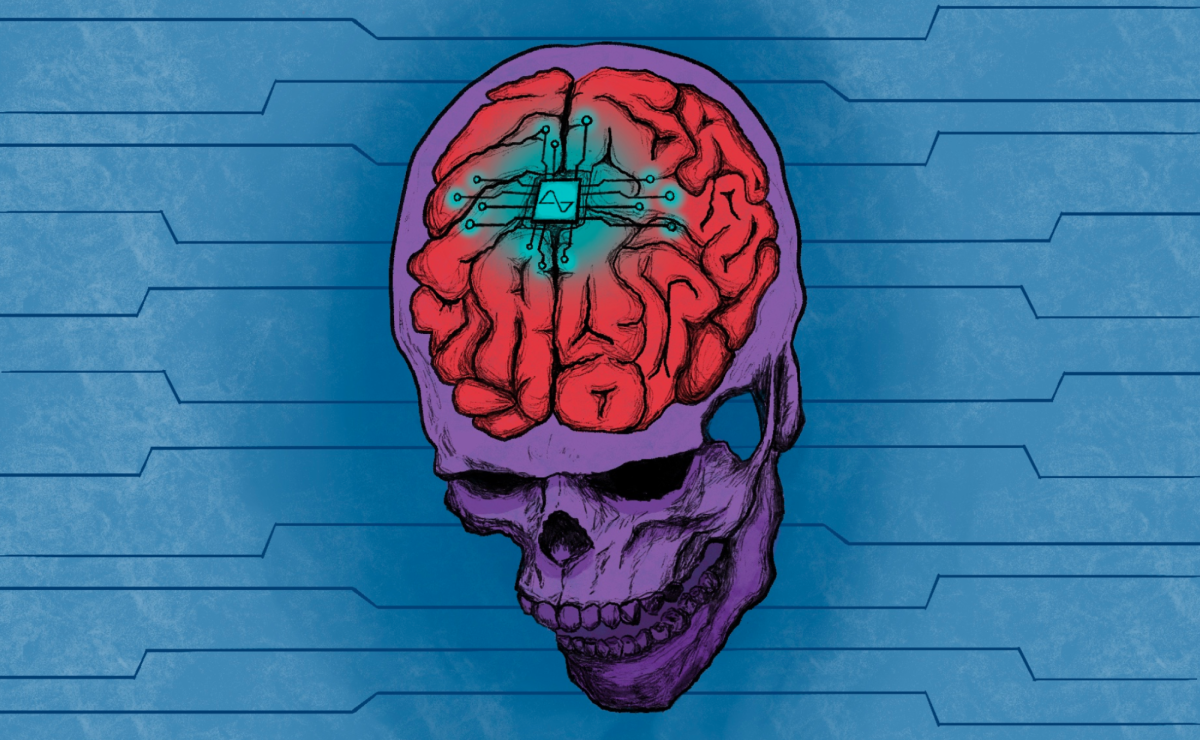
A surgeon operating the R1 robot inserts the circular, nine-millimeter-thick N1 Link into the cerebral cortex, replacing a small hole that has been drilled into the skull, which is later secured with cranial screws. The robot skillfully places 64 tiny polymer threads, equipped with 1,024 voltage sensors known as electrodes, into the brain’s motor region. The electrodes read synapses and interpret movements using external software. The recorded activity is then wirelessly translated to computer inputs, such as cursor movements after personalized calibration inside the Neuralink app — all made possible by the nervous system’s electrical communication.
“They will show a visualization, like an animation of a cursor moving right, left, up, down, diagonally, and all I have to do is follow it with an attempted movement with my hand in some way,” Arbaugh told Big Technology. “Eventually, all of those times that you follow the cursor, the algorithm is taking those brain signals and teaching this algorithm to associate those movements with neurons.”
The chip also tracks imagined movement — the user thinks about the action they want to perform, and the device interprets those signals accordingly. Unlike attempted motion, this type of movement doesn’t involve any physical effort.
The innovation of the N1 Link, McMillan said, is not that it can detect neural activity, but that the device is completely wireless, discreet and manufactured at a nanometer scale. Only the precision of the R1 robot allows surgeons to insert the microscopic threads at a depth of around eight millimeters into the brain, while avoiding puncturing blood vessels that cause scar formation.
“The robot is doing something very clever. It gets a field where you’re going to implant and it visualizes blood vessels,” McMillan said. “Obviously, there’s an electrode going into the tissue, but it looks much less invasive.”
The development of wireless computer control is part of Neuralink’s Telepathy project. Some Telepathy receivers have successfully manipulated robotic arms and operated cameras with a full 360-degree field of view, significantly improving the quality of life for the PRIME study’s target demographic.
Beyond Telepathy, Neuralink’s upcoming initiatives include Blindsight, which aims to restore vision in blind patients by implanting an array that translates visual information from an external camera, and speech restoration.
In the long term, Musk envisions Neuralink to be as accessible and transformative as the iPhone. Once the device is scalable, he believes it will enhance cognition for everyday users, enabling memory downloads and faster learning, while also treating mental health issues like depression and anxiety. The ultimate goal, according to Musk, is to fuse the human brain with artificial intelligence (AI).
However, some experts question whether Musk’s controversial plans will ever become a reality. One of Neuralink’s major challenges is its invasiveness, making it difficult for Musk to scale and develop future projects like Blindsight.
BCI is generally divided into two sectors: invasive and non-invasive. Non-invasive BCIs are typically wearable, taking the form of caps and headbands. Invasive methods involve cutting into the skull and penetrating the brain tissue, which can lead to device rejection in the form of scar formation and significant post-procedural complications — issues that were allegedly reported in Neuralink’s animal trials.
Since accessing the motor region of the brain may result in the death of some neurons, extending the coverage to the entire brain, either for human enhancement or giving the BCI a wider range of functions, would make this trade-off infeasible.
McMillan said that Neuralink’s only qualifying participants have been individuals with no hand function, in case the procedure would damage the motor region and render patients with some movement incapacitated.
“We’re implanting people where this function is completely absent because of their paralysis,” McMillan said. “That’s an important consideration, and even if you were to implant me in [the motor region], there’s a lot of evidence to suggest that I would not lose any hand functions.”
Researchers have long argued that invasive methods produce better neural readings than less or non-invasive approaches. However, one of Neuralink’s competitors, Precision Neuroscience, is developing the Layer 7 Cortical Interface, which sits flush with the brain. Although surgeons still need to slip the device through an opening in the skull, the interface avoids neuron death by recording signals through thin-film electrodes on the brain’s surface. The BCI contains as many electrodes as the N1 Link and is easily removable, as opposed to Neuralink’s deeper implantation method. This raises concerns about the Link’s long-term compatibility with organic tissue.
Along with questions about Neuralink’s feasibility, more than 20 Neuralink employees allegedly reported dissatisfaction with Musk’s handling of animal trials and the company’s high-pressure working environment. Sources told Reuters that experiments killing over 1,500 sheep, pigs and monkeys took place to quickly bring the product to the market, with little regard to the necessary preparation for ensuring quality experiments. However, the U.S. Department of Agriculture ensured that Neuralink facilities passed all regular animal welfare inspections.
Some scientists argue the problem with Musk at the head of Neuralink is his profit-over-discovery mindset, clout-chasing jargon and questionable motivations. Safety concerns and the idea of human-AI fusion as the company’s end goal have made many investors wary. Three of Neuralink’s co-founders — Dr. Benjamin Rapoport, Max Hodak of Synchron and Paul Merolla — have already left the company.
Neuralink is one of several companies in the BCI field, but its distinguishing factor, according to Dr. Laura Cabrera, Chair of Neuroethics in the Huck Institutes of the Life Sciences at the Pennsylvania State University, is the aggressive rhetoric Musk promotes regarding the company’s current and future projects. Because of Neuralink’s willingness to engage in controversy, Cabrera said it doesn’t seem like the company will adhere to ethical frameworks.
“Companies that take seriously what they’re doing, they recognize they’re not experts in ethics,” Cabrera said. “The problem with Neuralink is that one of their co-creators is a type of person who likes to hype things. That’s not ethical because you bring hope to patients when it’s still not clear that there’s anything to be hopeful about.”
The N1 Link is designed solely for detecting activity; it doesn’t add or alter any functions. However, the anxiety among scientists and media outlets surrounding Neuralink is and its potential — whether it can cure paralysis or potentially infringe on cognitive liberty — tends to distort the reality of the treatment, especially with Musk’s financial backing, McMillan said. Both McMillan and Cabrera highlighted how quickly public discourse around Neuralink shapes therapeutic misconception — the belief by research participants that a clinical trial will directly benefit them more than it can, rather than the trial’s purpose of gathering generalized knowledge of a treatment’s practicality. For example, when Arbaugh described his control of digital chess pieces as “intuitive,” philosopher and AI ethicist Dvija Mehta questioned the amount of agency Arbaugh believed he had: did he think he was moving the pieces himself, or was the implant?
In addition to exploring the societal and ethical considerations of neurotechnology, Cabrera is actively guiding the development of deep-brain stimulation to treat Parkinson’s disease. In her own work, Cabrera said she emphasizes equity, safety and responsibility. Cabrera said that safety, in Neuralink’s context, means ensuring that wireless BCIs can’t be hacked and that there are backup channels in case the main signal malfunctions. Equity refers to making these technologies financially accessible for those who need them, while responsibility means that BCIs should only be developed for individuals who need them.
“What worries me a little bit about the rhetoric is this idea that everyone should have a Neuralink,” Cabrera said. “It sounds cool, thinking about some of the portrayals that we’ve seen in science fiction, but science fiction also gives us the morals of what can go wrong.”
If anyone could adopt AI symbiosis through BCIs, in theory, they’d be able to surpass the physical barriers of learning and communication. Instead of sitting through lectures, students would already have the entire database of human knowledge downloaded. Projects would be more efficient, since partners could relay ideas without speaking. In creating a “neural lace,” Musk hopes that the brain will work in tandem with AI that he says is otherwise on track to replace humanity.
Junior Madeline Vanderloo highlighted the potential of telepathic technology to aid in everyday tasks, such as helping teachers make lesson plans or absorbing the contents of books more quickly. However, she also expressed concern over how the emphasis of productivity could infringe on the joys of creation.
“Some aspects are really good for people who are disabled, but I don’t want it getting too far to the point where we’re not actually human anymore,” Vanderloo said. “For example, it would take away from the actual process of art, such as having creativity and skills in your hand.”
Although BCI projects like Telepathy aim to achieve sensory autonomy, both McMillan and Cabrera acknowledged the possibility of the restoration-to-augmentation pipeline, as clear in Arbaugh’s near-telekinetic abilities. However, Cabrera said that in BCI technology, what counts as treatment or enhancement is hard to define for every individual. As a result, the question that neuroethicists ask is not what augmentation BCIs can achieve, but whether it should be achieved at all.
“We live in a society where we have markets that live on created needs, but then we disempower ourselves in who we really are,” Cabrera said. “Once we see technology as a tool, not as a means, I think that would be a responsible way of use.”