Under the glare of studio lights, dancers repeat the same delicate motions for hours, with sweat building on their foreheads as they tirelessly break in their pointe shoes. Behind the curtain of some of the biggest ballet productions in the nation’s capital lies a world of aching muscles, blistered toes and mental strain. Yet audiences don’t always see this hard work. According to the Survey of Public Participation in the Arts, adult attendance at ballet performances in the U.S. has declined by 52% since 1982. A deeper dive into Washington D.C.’s theater scene reveals that ballet is still flourishing.
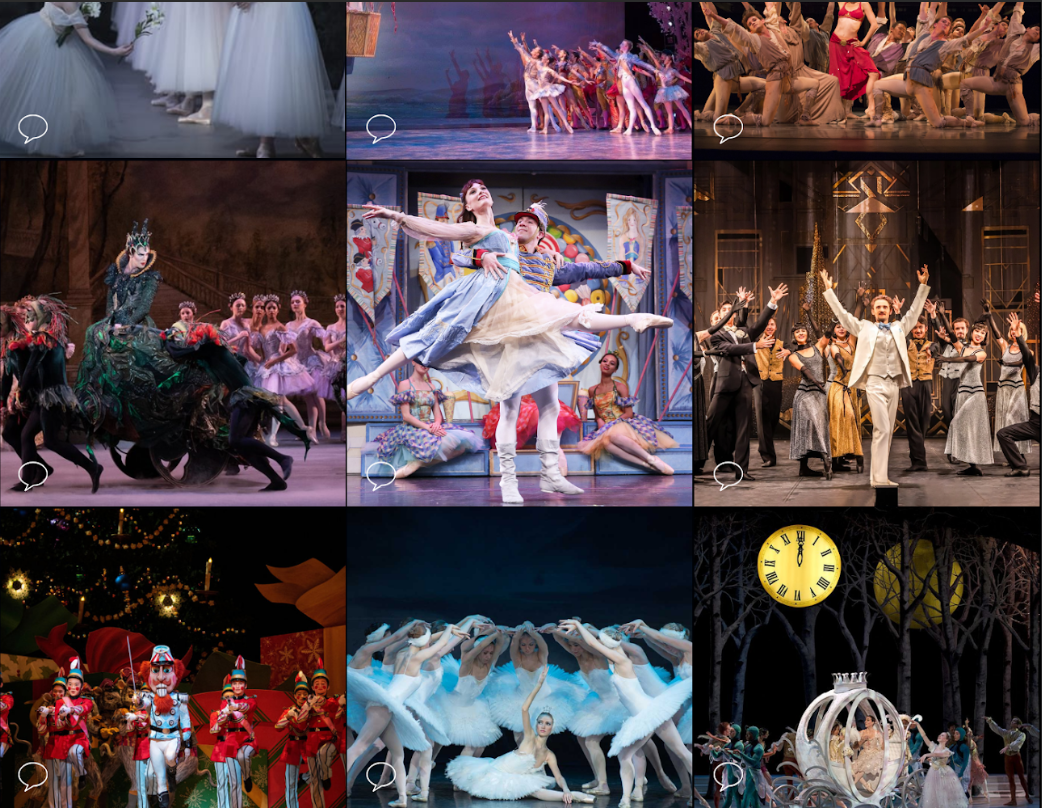
D.C. is home to the ballet company The Washington Ballet. Dance educator Mary Day founded The Washington Ballet as a professional company to showcase the best students from the Washington School of Ballet, which trains students ages 3 to 18. The company first premiered “The Nutcracker” in 1961. This season, The Washington Ballet produced its uniquely D.C.-focused version of “The Nutcracker” featuring local elements, including George Washington and cherry blossoms. It plans to put on productions of “Giselle” and “Cinderella,” as well as a student showcase.
“Cinderella” runs May 14-17 at the Kennedy Center. The ballet follows the classic fairytale story of Cinderella, her stepmother and stepsisters and the fairies of the seasons who help her. Soviet composer Sergei Prokofiev wrote the music for the ballet, but many choreographers have reimagined it over time, ensuring a different experience with each company. The Washington Ballet’s show runs for approximately two hours and is fitting for all ages.
The Washington Ballet’s production of Edwaard Liang’s “Giselle” runs Feb. 27-March 8 at the Shakespeare Theatre Company’s Harman Center, including both company and student dancers. The production also runs for approximately two hours.
“Giselle,” known for its romantic style of choreography, follows a peasant girl who died of a broken heart after discovering that her fiancé, Duke Albrecht, is engaged to a noblewoman and has disguised himself as a commoner. In the second act, Willis, spirits of women who have died from a broken heart before their wedding day, rise from their graves to lure men to their death in a haunting dance with Giselle’s ghost.
The Washington Ballet is the best-known ballet company in D.C., and many turn to it for a night at the theatre.
Capital Ballet is another local ballet company, though it’s non-professional and non-profit. Capital Ballet differs from most major ballet companies in that its main goal is to provide adult dancers, who are otherwise employed, the opportunity to train and perform in a professional context for both contemporary and classical dance.
Margaret Cowie is a dancer for Capital Ballet. She said she appreciates being able to dance with like-minded dancers, especially after she gave up professional dance.
“The opportunity to continue putting effort and time and passion into performance, to learn new choreography, work with choreographers and learn roles from classical ballets that I never had the chance to perform as a student is incredibly rewarding,” Cowie said.
Many of the company’s dancers trained pre-professionally but chose a different path after high school. Cowie said that as non-professional dancers, having works choreographed for them is incredibly unique.
The company also attends festivals like the Aurora Dance Festival annually, where local companies perform. Cowie said the festivals allow the company to showcase their pieces alongside more options for young dancers considering career paths.
Company co-director and dancer Emily Buss said the company prioritizes local choreographers, although the company’s dancers sometimes choreograph as well.
“We try to really engage with the local dance community and find choreographers in town,” Buss said. “Sometimes it’s young, emerging choreographers, sometimes maybe choreographers who are teachers who have not choreographed much before.”
Production planning begins months before the current season ends, and auditions and boot camps begin in late August. The company welcomes three to seven new dancers each year. Starting in September, the company rehearses twice a week, learning and polishing choreography. Most dancers with the company have full-time jobs outside of dance, so rehearsals start at 7 pm.
Capital Ballet dancer Margaret Cowie said rehearsals can be tiring, especially combined with the additional time dancers put in, whether that’s in the studio or in their living rooms reviewing choreography.
“It’s a long day for a lot of us, coming from our office jobs or whatever else we’re doing, and then getting into the studio and staying there,” Cowie said. “It takes a good bit of time outside of the studio as well.”
Unlike in traditional professional companies, Capital Ballet dancers assume management and leadership roles. From September through March, they work on choreography, costumes, social media, fundraising and more.
Buss said dancers usually want to be involved however they can, and many help in word-of-mouth advertising, although volunteering isn’t mandatory.
“If the dancers weren’t engaged, the company wouldn’t exist. We’re lucky that we have such an amazing group of dancers with a vast skill set and background,” Buss said. “Our dancers on the social media team are even more impressive, because they’re running back and forth from doing a combination in class to filming something at the front of the studio.”
Capital Ballet offers open rehearsals, where members of the public can watch for free and understand what dancers are working on.
Their upcoming production in March will include scenes such as “Kingdom of the Shades” and Act II Pas de Deux from the classical ballet “La Bayadère,” a forbidden romance between temple dancer Nikiya and warrior Solor in ancient India. It’s a tragic story known for its drama and the “Kingdom of the Shades” scene, in which dozens of dancers perform demanding and precise routines.
Buss said “La Bayadère” is special, as companies don’t perform it as often as some other ballets, and it has universal appeal.
“It’s one of these big juicy classical ballets with lots of dancing for everyone,” Buss said. “There’s a moment as all the dancers enter the stage, they’re coming on in arabesques, and that’s one of those showstopper moments.”
The show will also include three other pieces: two original ballet works and one restaging. Tickets are currently on sale, with discounts for students and children. Cowie said the show is more accessible because it features short, varied excerpts, rather than a long classical ballet.
Touring productions will also pass through D.C. throughout the first half of the year. The American Ballet Theatre performs Christopher Wheeldon’s production of “The Winter’s Tale” — an adaptation of a Shakespeare play — at the Kennedy Center from Feb. 11-15. The story follows King Leontes, who believes his pregnant wife Hermione is having an affair, and their daughter Perdita, who is abandoned and presumed dead.
Adolph Bolm founded the San Francisco Ballet, America’s first professional ballet company, in 1933 as part of the San Francisco Opera Ballet. It originally trained dancers for the opera but became known for the first U.S. productions of classic ballets “Swan Lake,” “Coppélia” and “The Nutcracker.” The company is performing “Mere Mortals” at the Kennedy Center from May 27-31. The ballet reimagines the story of Pandora’s Jar in a modern, technology-driven age. It’s a fully immersive experience that examines the complexity of humankind’s steps into unknown territory as Artificial Intelligence use grows.
Choreographer George Balanchine, known as the father of American ballet, and writer Lincoln Kirstein founded the New York City Ballet in 1948. The company gained fame for its modern, music-focused productions. The New York City Ballet will stop in D.C. on its tour from June 2-7, presenting a mixed program. The performances celebrate Maria Tallchief, America’s first prima ballerina and a pioneering Native American dancer, as a continuation of her 100th birthday festivities. The centennial program includes Balanchine’s “Scotch Symphony” and “Sylvia: Pas de Deux,” which had steps specifically created for Tallchief’s talents, as well as “Firebird,” one of her most well-known roles.
The New York City Ballet will also present a showcase of works by Ulysses Dove, Pam Tanowitz, Alexei Ratmansky and Justin Peck. The works include “Red Angels,” “Gustave le Gray No. 1,” “The Times are Racing” — a ballet performed in sneakers — and “Solitude,” which will make its Kennedy Center debut in June.
Ballet schools in D.C. train dancers to work in well-known productions while also putting on their own productions throughout the year. Additionally, some schools, such as BalletNova, offer pre-professional classes alongside their standard-level classes. The Metropolitan School for the Performing Arts and the Maryland Youth Ballet both offer pre-professional programs for students interested in professional dance.
Laura Grace Badwey is a dancer at the Metropolitan School for the Performing Arts in northern Virginia. She said that productions, even at a dance school level, take months of preparation, both in choreography rehearsals and in show organization. The time spent in production preparation is so extensive that less than 2% of it is spent on stage.
Badwey plans on dancing professionally in the future and said D.C. is a great place for aspiring dancers.
“D.C. offers a lot more opportunities in the arts, because there’s just more resources,” Badway said. “In D.C, ballet is everywhere, so it’s hard to avoid it.”
According to Badwey, among D.C.’s resources are dozens of dance schools, which keep people involved in ballet. She said that ballet’s future in D.C. depends on parents enrolling their children in classes.
D.C.’s ballet companies and touring productions offer numerous opportunities for people of all ages, whether ballet devotees or newbies, to experience ballet this season.
Tickets to Capital Ballet’s performances on March 21 and 22 are available here.