
In labs and lecture halls across universities in the U.S., researchers, professors and students are having conversations they never expected. What once seemed like a great place to push the boundaries of knowledge is now plagued by a question: Can we still do that here?
After taking office in January, President Donald Trump implemented policy changes that altered higher education. When Israeli forces started invading the West Bank, many student-led protests took place on the Columbia University campus, demanding that the school cut ties with Israel. In March, Trump cancelled $400 million worth of grants and contracts to Columbia University in response to these pro-Palestinian protests. This caused the Columbia administration to suspend and expel dozens of students in an attempt to regain funding.
Since then, Trump has taken similar actions toward other schools, issuing orders to cancel diversity, equity and inclusion (DEI) practices and limit the number of international students. On Oct. 1, he sent out a “Compact for Academic Excellence in Higher Education” letter to various universities across the nation, demanding concessions, including dropping international student admission rates and getting rid of most DEI programs from each school that receives preferential federal funding. These governmental actions contribute to a U.S brain drain in higher education — an exodus of professors and researchers from a country to pursue better academic opportunities abroad.
Out of 1,600 U.S.-based researchers, 75% said they were considering emigrating from the U.S. due to recent cuts to research and higher education funding. Their goal is to find more freedom of expression and the ability to conduct research without fear of losing funding. In countries where academic independence is more protected, scholars can explore sensitive topics without worrying about political or financial backlash. Researchers can focus on discovery and innovation rather than navigating a restrictive and underfunded environment.
Under the Trump administration, higher education is a frequent victim of targeted political rhetoric. Trump’s discourse portrayed universities as elitist, and his administration criticized faculty members in public forums while cutting federal grants for research and development.
The NIH ended around 400 grants for Columbia due to the funding cuts by the Trump administration. Emer Smyth, a PhD scientist at the Columbia Cancer Center, said that the federal government no longer seems to value intellectual advancement in the same way it used to.
“We have over $100 million in cancer research funding and 70% of that comes from the federal government,” Smyth said. “In a single weekend, we found out we had lost pretty much all of it.”
Actions by Trump and his administration can impact the way American schools educate the next generation of students. When educators and researchers leave, they take decades of experience with them, leaving students with fewer mentors and research opportunities and a reduced ability to learn at an advanced level.
Worldwide, universities have seen an increase in applications from U.S.-based researchers, who, under Trump’s administration, face uncertainty about whether they’ll retain their funding and be able to continue their research.
In addition to funding concerns, social and political factors influence scholars’ decisions to leave America. Many faculty across two and four-year institutions said that they now have less freedom and feel restricted in their teaching, more so than before. Such restrictions threaten educators’ freedom of speech, as they often avoid politically sensitive topics due to fear of potential backlash from the current administration.
Masaki Hidaka, a professorial lecturer at American University, quit teaching due to Trump’s election. Hidaka said she stepped back from her 20-plus-year teaching career due to Trump’s policies.
“While the new administration insists that it protects free speech, it simultaneously punishes those it views as subversive,” Hidaka said. “There was no way I could teach about the Constitution if the new administration didn’t believe that the Constitution itself is sacrosanct.”
While this brain drain in higher education affects many college students and researchers, some are more reliant on federal grants and, therefore, more affected by funding cuts. These cuts significantly impact graduate students and postdoctoral researchers in all fields, mostly at the beginning of their careers, some of whom will follow their professors abroad, drawn by the stability and research pathways international institutions provide.
New policies affecting student visas, such as a $100,000 fee for H-1B visa applications, have made it significantly harder to study in the U.S. as an international student. Molly Scott, an assistant dean for graduate and executive degree program admissions at Georgetown University’s McDonough School of Business, said that international students had difficulty obtaining visas to study in the U.S. due to a three-week period in the spring when U.S. embassies suspended visa appointments.
“When the embassies started retaking appointments, there were new processes put in place, like a social media account review that made it hard for international students to come to Georgetown,” Scott said. “Because of this, we had more students defer to the future or decide not to come.”
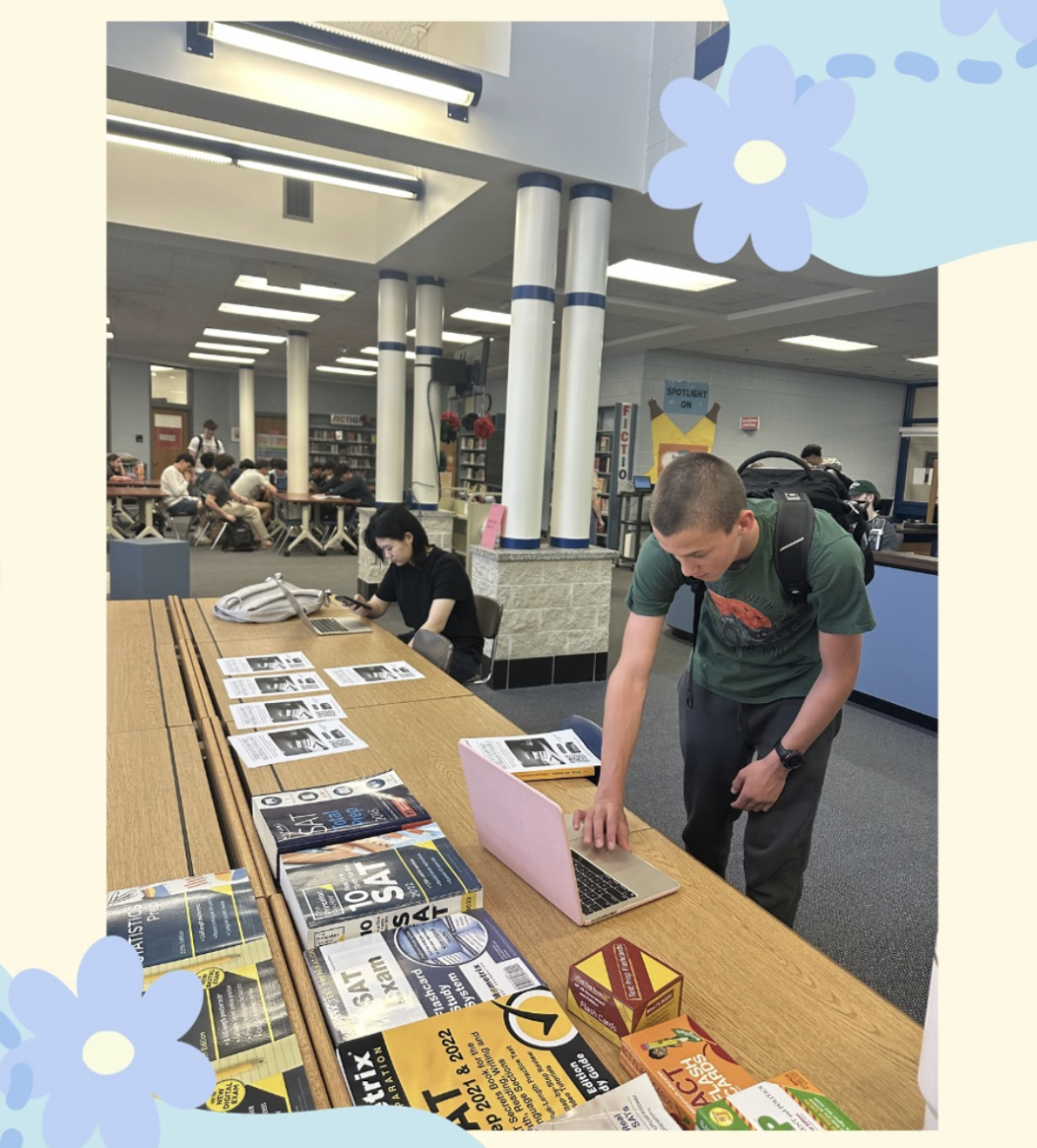
These new Trump policies also affect American high school students seeking higher education abroad. Anti-immigrant rhetoric, increased scrutiny of student visas, and higher costs are causing international students to consider leaving the country for better academic opportunities.
Senior Tshewang Khandro said she no longer wants to pursue higher education in the U.S. due to the Trump administration’s policies.
“Studying in America is already significantly more expensive than in many other countries, and with the increased fees for an H-1B visa, it just doesn’t feel worth it,” Khandro said. “All the restrictions being put on immigrants to keep them out make me feel unwelcome, and I don’t want to be somewhere I’m not wanted.”
These policies are prompting other countries to incentivize U.S. researchers to relocate abroad for better work. Some international institutions are recruiting U.S. professionals, as the country’s current academic instability presents an opportunity to attract bright minds. In France, Aix-Marseille University is allocating between $10 million and $16 million to support 15 researchers from overseas, and the European Commission is considering issuing a special passport for scientists, making it easier for them to study and work abroad.
The long-term consequences of this brain drain are unknown, but the current trend of researchers and professors leaving the U.S. could shift global research leadership. The U.S. was once renowned as the premier destination for innovation and education, but it may face increasing competition from nations that are investing more in scientific research and technological advancement. The loss of experienced faculty at higher education institutions could pose challenges for training the next generation of researchers, as mentorship and institutional knowledge aren’t easily replaced.
The ongoing brain drain the U.S faces highlights the complex and possibly toxic relationship between politics and academia. As political rhetoric intensifies and funding cuts continue, the movement of scholars across borders is likely to increase.
“I am worried that in the long run, it will be detrimental, but I am hopeful,” Hidaka said. “American colleges are amazing places where kids can learn and grow and research, and I do believe that that will come back at some point.”