A curious teenager sits expectantly in a dark movie theatre as raging football games with extravagant marching bands, food fights in cafeterias and locker doors crashing flash across the screen. The soon-to-be international student stares in awe and fear at what they imagine their new life at an American high school might look like. Around the world, viewers watch American high school movies, dreaming about one day cheering under the Friday night lights of sports games and walking crowded halls. However, the classic portrayal of high school in American movies may not be the reality for many.
Whitman’s proximity to Washington, D.C. attracts a large number of international students, mainly children of diplomats and other international employees with families located in the area. It can be difficult for some new students to know what to expect when arriving at a new school. However, movies and television often feature plots centered around American high schools, allowing students to build expectations for their arrival.
The yellow buses that take students to and from school are a popular marker of the American high school experience for many foreign students. In other countries, such as South Africa, Mexico and the U.K., students more commonly use public transportation or walk to school.
The school bus system is the largest mass transit system in the U.S., with one of the most recognizable colors. In 1939, school transportation officers from every state gathered in New York to decide how to standardize the school bus. The meeting was the idea of Frank Cyr, who conducted a study where he found that children were riding to school in various unnoticeably colored trucks, buses and in one case, horse-drawn wagons. His results showed the need for a mass-produced bus in one visible color. The high-visibility color, named National School Bus Glossy Yellow, remains on school buses today. School buses help consolidate smaller rural schools, allowing better access to education for remote communities.
Senior Helena Santamaria, who moved to Bethesda over a year ago from Bogotá, Colombia, said that the buses match the movies perfectly.
“The yellow buses are exactly as I expected,” Santamaria said.
American school lunches are also an international difference. Many public schools in other countries don’t serve lunch in traditional cafeterias, which can be due to limited government budget, cultural norms or lack of public support. For example, Mexico doesn’t have a national public school lunch program, and Indonesia just started a free lunch initiative this year.
Americans have criticized school lunches for many years due to their lack of nutrition and high taxpayer costs. American public schools waste over a quarter of the vegetables and milk purchased for school lunches annually, mostly due to complicated serving rules that mandate serving food, even though taxpayers contribute a total of $1.7 billion to buy and cook this food. A 2021 report found that students are receiving suboptimal amounts of nutrients from school lunches. However, school lunches can provide an essential element of the high school experience and relieve pressure on both parents and students.
Freshman Amelia Pryor, who moved from Canberra, Australia, to the U.S. two years ago, said she had higher expectations for school lunches as well.
“In the cafeteria, I thought the food would be better,” Pryor said.
In American high school movies, there is often emphasis on the sports game scenes and “Friday night lights” — a term that refers to the atmosphere of football games. Whether the characters are cheerleaders, football players or fans, movies like “High School Musical,” “Bring It On” and “Friday Night Lights” include many sports game scenes, showing the importance of athletics in America. School athletics outside of physical education classes don’t exist in many countries, which adds to the fascination with American high school sports in movies and professional sports online.
Santamaria said the football games at Whitman felt exactly as they appeared in the movies.
“My first time going to the football games, my friends and I, because I went with mostly international people, felt like we were in a high school movie,” Santamaria said.
High school movies’ portrayal of sports can convey stereotypes, regardless of their truth. Most high school movies show cheerleaders, jocks and “band geeks” as separate groups, when in reality, these groups can mix and don’t always conform to rigid social structures.
Making new friends may be harder for international students when coming to an American school, including in college. Malva, a Swedish exchange student in the U.S., found that American students are very welcoming and easy to talk to, but they may not show that they’re interested in a closer friendship. A study found that nearly 40% of exchange students would have liked more meaningful interaction with Americans. Thirty-two percent attributed this to superficiality, while 25% attributed it to not being open to other cultures. Some American students said they didn’t make an effort to be friendly to foreign students, and international students said they feel more comfortable with each other.
Despite movies often featuring bullying, Pryor said students in America are much friendlier than she expected.
“There’s a lot more mean people shown,” Pryor said. “A lot more shoving in lockers than what they actually are. People are nice here, in real life.”
In the 2022-2023 school year, there were 852 reported bullying incidents per 1000 students in Montgomery County, an increase from the previous school year.
Junior Undine Marret-Uhlmann moved to the U.S. from France about six years ago. She said there is more unrealistic bullying in the movies compared to her experience at Whitman.
Bullying in movies is exaggerated, but bullying still has a presence in American high schools. A 2023 study found that international students, specifically refugee and immigrant students, experience 6.5% more bullying and face greater social challenges.
Santamaria said she found the social structure at Whitman to be very different from what she was used to in Colombia. She mentioned a lack of familiarity between people and a lack of unity within each grade.
“I’m a very expressive person,” Santamaria said. “Most of the people in my country are, and here, it’s considered very weird.”
International students often face culture shocks, one of which is the difference in social cues from country to country when it comes to what’s considered appropriate or normal.
Academics are often portrayed inaccurately in the media. Grading systems are distinct internationally, potentially complicating international students’ adjustments to American standards. Some exchange students consider the American system easier. Malva noticed that grades come more from the quantity rather than the quality of work and that many assessments are only multiple choice, a difference compared to Sweden. Some students come to Whitman expecting challenging classes, especially given Whitman’s high standards, while others expect the opposite.
Pryor said the biggest culture shock was the workload at Whitman and how early people begin deciding about college.
“Everyone’s preparing for college since sixth grade,” Pryor said. “No one thinks about college until you’re in 11th grade [in Australia].”
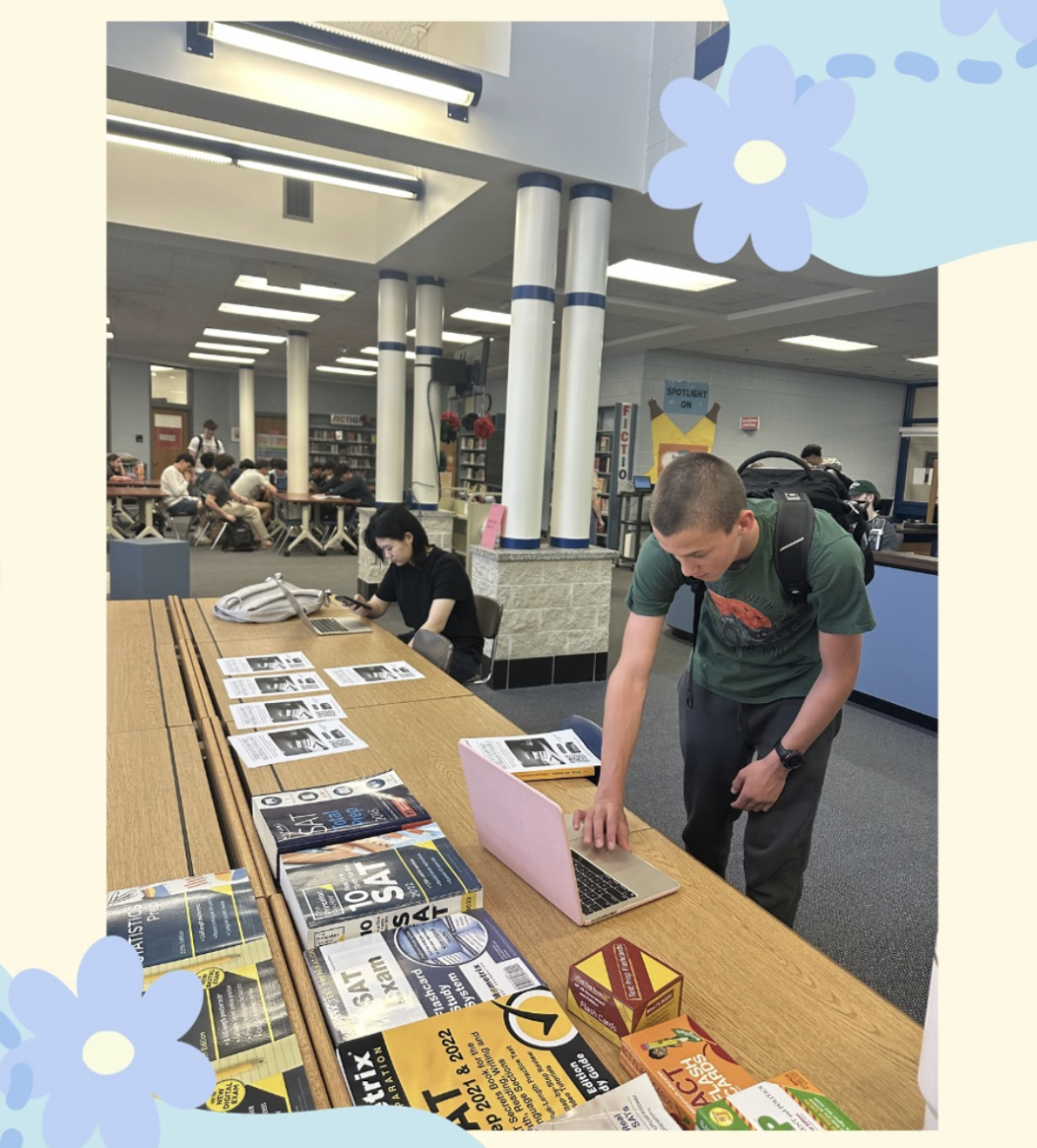
Whitman’s culture of academic excellence often means college preparation is a big topic early on in students’ lives. The media often shows only the exciting part of college applications, such as the decision or submitting a final application, when in reality, there is more work behind the scenes.
Senior Ella Tatsa-Laur moved to the U.S. from Israel over a year ago and said her biggest adjustment to Whitman was feeling comfortable with the way classes are taught.
“In Israel, sophomore year, I learned a lot of the material you do in calculus,” Tatsa-Laur said. “But half of the material you do in pre-calculus, we didn’t do.”
The U.S. has varying degrees of advancement in its curricula. U.S. students rank below average in mathematics compared to students from other Organization for Economic Cooperation and Development countries, but rank higher in science. Additionally, about two-thirds of Americans see K-12 STEM education in the U.S. as average or below average.
Considering the academic and social aspects, Marret-Ulhmann said that high school in the U.S. is more relaxed than she had expected from the movies.
“It’s really similar to how it’s depicted in movies: the buses, the games, everything,” Marret-Uhlman said. “It’s just so much like how I imagined it to be.”