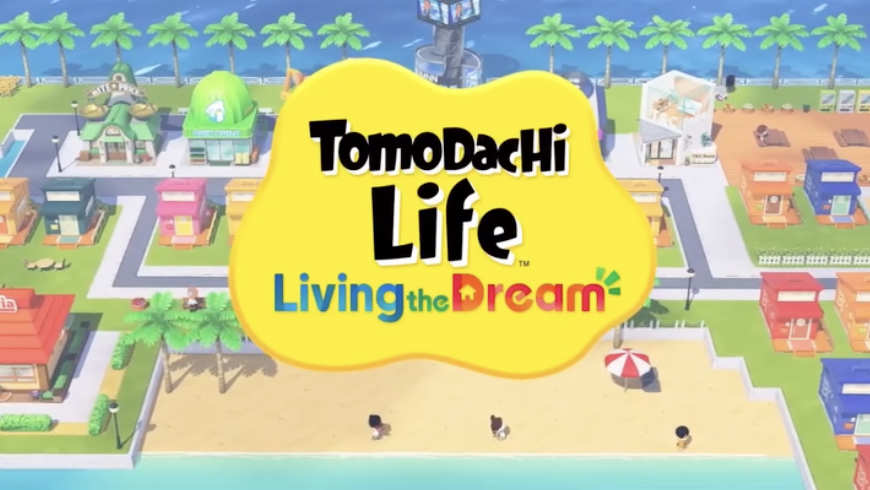
Most video games hand the player a goal: defeat the boss, build the city, survive the night. “Tomodachi Life: Living The Dream” does something far different. Rather than forcing a specific objective, Living The Dream lets the player decide how they’d like to enjoy the game.
In April 2026, Nintendo released “Tomodachi Life: Living The Dream” on the Nintendo Switch. Since its release, gaming influencers have flooded the internet with reviews and playthroughs of the video game. As a sequel to Tomodachi Life, which debuted on the since-discontinued Nintendo 3DS, the newly released game has served as a source of intrigue for the gaming community as a long-desired remake, generating widespread acclaim.
As a life-simulation game, Living the Dream appears to be a hybrid between Electronic Arts’ “The Sims” and Nintendo’s “Animal Crossing.” However, unlike both games, Living the Dream’s focus is less on the player controlling the game and instead on the characters the player makes. In this case, the player must fill an island with Miis — digital avatars that players can customize to look like real people or fictional characters — and host interactions between them.
A Mii’s “level” is measured in happiness. Feeding them, giving them clothes and working on their relationships with other residents levels them up. Increasing the Miis’ happiness also makes the island level up, expanding the player’s access to new gifts and traits for Miis. Players can experience new ways to customize the island using items like paths, tables and benches, making the Tomodachi experience unique to everyone.
The innovative face painting feature and the complete Mii creation process, which are comparable to the makeup feature in “Miitopia,” a role-playing game on the Nintendo Switch, are a highlight. “Miitopia” allows players to use certain catalogued shapes to create layered face designs that move with their Mii’s expression. Now, in Living the Dream, the player has more flexibility to draw on the Miis, which can make it easier to include more detail. The Nintendo Switch touchpad works with a stylus, permitting for more precision when using the face paint feature.
The vivid details and styles contribute to the game’s balanced atmosphere. The fictional world feels realistic enough to make the Miis stand out among the bright houses, extravagant-looking shops and the island’s saturated colors. Yet, they’re able to blend in thanks to the game’s refined shading — shadows move with the characters, and developers’ precise attention to detail means shadows of still objects move as the sun changes time in sync with the local time on a player’s Switch.
The game’s music is calming, providing just the right amount of ambience. Tracks are intentionally left very basic, allowing them to change depending on specific interactions between the Miis. When a Mii is sad, in love or wants to make a friend, the music will change to match its mood. The sound effects also make the game more engaging, especially during sporadic events that Miis can experience, which range from comedic gags to incidents that influence their relationship with other Miis.
While the player dictates the Mii’s personality, quirks and relationships, one of the game’s most prominent features is the spontaneous interactions that add a dramatic, sensationalized feel. Miis randomly fall in love, start playing games like bowling, or travel across the island to greet someone, breaking up the gameplay and preventing it from becoming monotonous. Additionally, the game runs offline, allowing relationships to evolve and introducing new developments each time players log back in.
The autonomy offers an innovative spin on the lifestyle simulator popularized by games like “The Sims,” which require more player input. The Miis’ needs are largely trivial, making the game less about meticulously dictating their every decision and more about experiencing their lives in a laidback, relaxed manner.
Even though the game can run without player input, proposing, making friends and moving Miis in together require extensive player interaction. This can become problematic when players have to manage multiple Miis, each one making tedious requests ranging from playing a game to changing their relationship status with another Mii. The player can ignore such requests, but that usually comes at the expense of cluttering the screen and complicating the overall playability.
To avoid undesirable relationships and other requests, players sometimes resort to declining a Mii’s calls. In response, the Mii will deliver a lengthy monologue to make the player regret choosing that option. While supporting the Miis is the main point of the game, managing all of their problems at once can feel overbearing.
Despite this, the game still offers plenty of funny moments and interesting dynamics between Miis for the player to experience. Even with some repetitive events, seeing different characters interact is the game’s real highlight, as it’s enjoyable to see the wide variety of new scenarios that can result from seemingly minor decisions.
“Tomodachi Life: Living the Dream” is a game worth playing, even if just to create some Miis of friends and watch them run around. It’s a cozy, laid-back experience that supplies an escape from the real world without requiring too much effort on the player’s end.